

Cómo enviar una transmisión: una guía logística
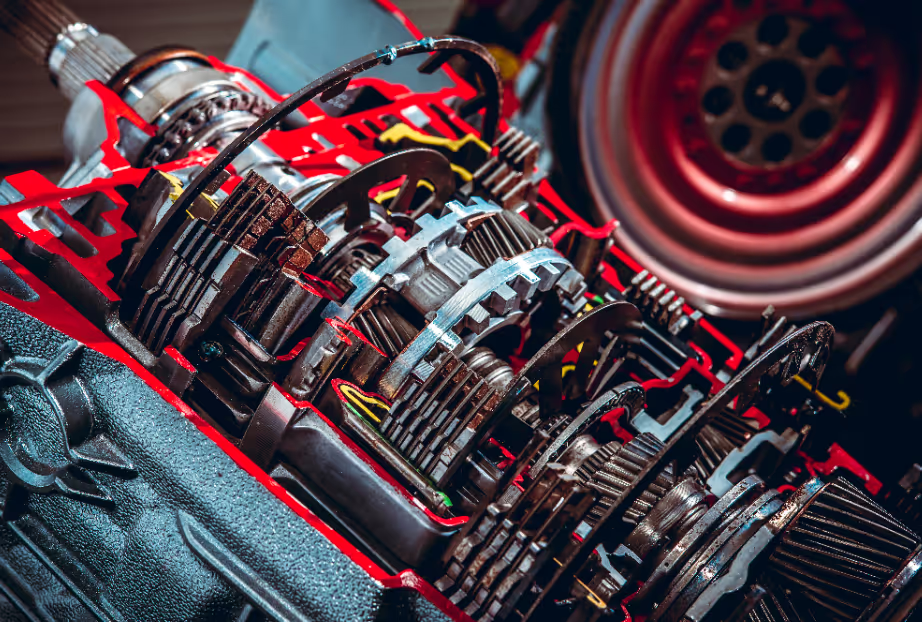
En el sector automotriz de alto riesgo, la transmisión es un activo industrial de alto valor que sirve como el corazón del rendimiento del vehículo. A medida que los fabricantes siguen globalizando su huella de producción, el recorrido logístico de estas unidades de alto valor se ha convertido en una tarea de alto riesgo en la que el margen de error se mide en micras y milímetros. Trasladar con éxito estos conjuntos a grandes distancias los expone a un entorno volátil en el que los métodos de transporte tradicionales a menudo no proporcionan la combinación necesaria de un blindaje estructural robusto, una manipulación controlada y una gestión de la contaminación.
Para garantizar que estas unidades lleguen listas para su instalación inmediata, los líderes de logística deben adoptar una estrategia de envío que tenga en cuenta hasta qué punto estas vulnerabilidades físicas y ambientales específicas pueden comprometer una caja de cambios ajustada con precisión y cómo las soluciones logísticas especializadas pueden mitigar de manera efectiva estos riesgos para garantizar la integridad del tren motriz.
Riesgos críticos de seguridad del transporte por transmisión
El envío de una transmisión implica sortear múltiples riesgos que pueden comprometer la integridad operativa y la seguridad de la unidad antes de que llegue a la línea de ensamblaje.
- Impacto físico en los componentes de precisión: Los choques externos durante una manipulación brusca pueden romper o doblar fácilmente los componentes que sobresalen, como las consolas de cambio laterales, los variadores angulares del velocímetro y los conjuntos de sensores, que suelen ser los primeros puntos de fallo en una colisión.
- La amenaza de contaminación: Mantener unas condiciones impecables es esencial, ya que la entrada de humedad o polvo durante el tránsito puede provocar fallas internas catastróficas o bloqueos hidráulicos una vez que la unidad esté en funcionamiento.
- Distribución inadecuada del peso y tensión del engranaje: Si una transmisión cambia de marcha o se apila incorrectamente, la presión resultante en el eje de entrada puede doblar los engranajes internos o desalinear el conjunto, lo que hace que la unidad se agote al llegar.
Más allá del riesgo inmediato de daños mecánicos, la falta de seguridad de una transmisión conlleva graves consecuencias operativas y reglamentarias. Estos conjuntos de precisión son sensibles a los golpes, las vibraciones y la exposición ambiental durante el transporte. Cualquier compromiso en la protección estructural puede interrumpir las operaciones posteriores, retrasar los cronogramas de instalación y aumentar los requisitos de inspección o reprocesamiento en toda la cadena de suministro. Incluso los daños o la contaminación más leves durante el transporte pueden provocar costosas ineficiencias en la manipulación, tiempos de inactividad de los activos y un mayor control de calidad, especialmente en entornos de producción automotriz estrictamente regulados.
Complejidades en la planificación logística y el cumplimiento
Los riesgos mecánicos y ambientales inherentes a las transmisiones hacen que su logística sea significativamente más compleja que la de piezas automotrices estándar. Cualquier fallo en la contención o la manipulación puede provocar una serie de problemas normativos y de seguridad, por lo que cada etapa del proceso de envío debe planificarse y ejecutarse meticulosamente.
Cargas útiles de alta densidad frente a componentes internos delicados
Las transmisiones presentan un obstáculo logístico único porque son intrínsecamente grandes, voluminosas y pesadas, y a menudo pesan entre 100 y 400 libras. Para mover una masa tan importante se requiere una infraestructura de elevación mecánica especializada y un módulo de transporte capaz de soportar la importante inercia que se genera durante el tránsito marítimo o por carretera. A diferencia de los productos a granel estándar, el peso de una transmisión rara vez es uniforme, por lo que el equilibrio y la seguridad de la carga son una de las principales prioridades para la seguridad del almacén.
Sin embargo, al centrarse únicamente en el peso exterior, se pasan por alto los cientos de componentes interconectados y de alta precisión que se encuentran dentro de la unidad. Una transmisión es tan resistente como lo sean sus dientes de engranaje o sincronizadores más delicados, por lo que es necesaria una estrategia de protección «blanda» dentro de una estructura «dura» para amortiguar las fuerzas destructivas durante el tránsito. Lograr este equilibrio requiere soluciones de embalaje personalizadas y especializadas que se adapten a dimensiones y pesos específicos y, al mismo tiempo, cumplan con los estándares mundiales de integridad estructural, contención de fluidos y control de la contaminación.
Orquestación de la alineación de la cadena de suministro multipartidista
La logística automotriz funciona como una secuencia de varios niveles que requiere una sincronización absoluta entre los fabricantes, los proveedores de logística externos (3PL), las líneas navieras y los operadores portuarios. En este complejo ecosistema, incluso un fallo localizado en la comunicación o en la disponibilidad de los activos puede provocar una cascada de retrasos que culminan en costosas paradas en las líneas de montaje. La gestión satisfactoria de estas partes tan dispares requiere un lenguaje logístico estandarizado en el que todas las partes interesadas estén alineadas con los requisitos de manipulación específicos de la transmisión, desde las especificaciones del equipo y la configuración de la carga hasta los protocolos de inspección y los ciclos de devolución.
Al utilizar un sistema de embalaje uniforme, las empresas pueden garantizar que las instrucciones fundamentales, que van desde los requisitos de «este lado hacia arriba» hasta los puntos de entrada específicos de los transpalets, se mantengan coherentes en los distintos estándares operativos. Esta estandarización permite una comunicación fluida de los protocolos de seguridad e higiene desde la fábrica hasta el destino final, lo que garantiza que la integridad del activo del sistema de propulsión se mantenga a lo largo de toda la cadena de suministro mundial.
MB12M: una solución IBC especializada para el transporte de transmisión

El MB12M de Goodpack está diseñado especialmente Solución de alquiler de IBC diseñado para cerrar la brecha entre la sólida protección industrial y los requisitos matizados de los componentes automotrices de alta precisión. Con unas dimensiones estandarizadas de 1150 × 975 × 838 mm [45,2» x 38,3» × 32,9»] (largo x ancho x alto) y una capacidad de carga útil de hasta 1000 kg (2.204 libras), el MB12M está diseñado para integrarse perfectamente en contenedores de transporte y plataformas de camiones estándar. Este dimensionamiento preciso es fundamental para eliminar el espacio desperdiciado, lo que no solo reduce los costos de envío sino que también evita el movimiento interno que a menudo provoca daños en las unidades durante el tránsito de larga distancia.
Fortificación estructural y blindaje contra impactos
El MB12M cuenta con una construcción robusta de acero galvanizado que proporciona una protección física superior contra los impactos y los movimientos erráticos inherentes al transporte marítimo mundial. Esta carcasa rígida protege las valiosas transmisiones de las fuerzas externas de pinchazos y aplastamientos, que podrían comprometer fácilmente las alternativas tradicionales de madera o plástico.
Además, la naturaleza duradera de este IBC garantiza que la carga útil permanezca en posición vertical durante todo el viaje. Al mantener una orientación fija, el contenedor evita que el peso de la transmisión descanse sobre delicados ejes de entrada o conjuntos de sensores vulnerables, lo que elimina el riesgo de fallas estructurales antes de que la unidad llegue a la planta de ensamblaje.
Facilidad de manejo y protección integrada
A pesar de su extrema resistencia estructural, el MB12M presenta un diseño liviano en relación con su capacidad, lo que optimiza la relación entre la carga útil y el peso del empaque. Está equipado con una tapa integrada que proporciona un sellado seguro y constituye una barrera esencial contra la humedad y el polvo transportado por el aire, que podrían comprometer la integridad de la transmisión.
Desde el punto de vista operativo, el diseño es totalmente compatible tanto con las carretillas elevadoras estándar como con las transpaletas manuales, lo que garantiza un movimiento eficiente en diversos entornos de almacén. Esta doble compatibilidad permite una manipulación precisa incluso en espacios reducidos, lo que reduce significativamente la probabilidad de accidentes relacionados con la manipulación durante las etapas finales de la cadena de suministro.
Protección diseñada para transporte limpio y embalaje
Para mantener un entorno de transporte limpio y que cumpla con las normas, la MB12M admite la integración de sistemas de embalaje diseñados a medida y adaptados a la geometría precisa de la transmisión. Estos insertos estabilizan la unidad, minimizan las vibraciones y evitan el contacto entre componentes durante el transporte.
Además, cuando el MB12M se combina con las cubiertas externas adecuadas, proporciona una defensa integral contra la entrada de polvo y humedad. Este nivel de gestión de la contaminación garantiza que todas las transmisiones lleguen a la línea de montaje limpias de fábrica, listas para su instalación inmediata sin necesidad de limpiezas adicionales. Para evitar los derrames internos, la unidad facilita la integración de revestimientos especializados o configuraciones de bandejas de goteo de terceros para contener de forma segura cualquier fluido residual de la transmisión. Este enfoque proactivo de contención de fluidos minimiza los riesgos de derrames durante la manipulación y el tránsito, al tiempo que ayuda a las organizaciones a cumplir las normas ambientales y de seguridad laboral en todas las cadenas de suministro mundiales.
Ofreciendo excelencia operativa
El éxito de la logística de transmisión es, en última instancia, una disciplina de protección de precisión, en la que la integridad estructural, la estabilización y la coherencia de la cadena de suministro deben gestionarse como una prioridad única e integrada.
Al hacer la transición a un modelo de embalaje circular y ligero, los fabricantes pueden fortalecer la resiliencia de la cadena de suministro y, al mismo tiempo, reducir las cargas operativas asociadas con la propiedad, la recuperación y la estandarización de los envases inherentes al transporte por tren motriz, estableciendo una forma rentable de mantener la protección total de los activos durante todo el ciclo logístico. Este cambio estratégico garantiza que todas las transmisiones lleguen con la precisión mecánica y la fiabilidad necesarias para el montaje inmediato de los vehículos, respetando los estrictos estándares de calidad del sector en toda la red de distribución mundial.
Goodpack potencia esta misión a través de una presencia operativa global sin igual que abarca 80 países e incluye una red de más de 5000 puntos de entrega y recogida. Esta enorme escala proporciona la infraestructura necesaria para estandarizar la logística en diversos mercados, lo que ilustra cómo una Solución de envasado IBC reduce la fricción asociada con el embalaje no estándar y la recuperación manual de activos. Al asociarse con un proveedor de empaques resiliente, los líderes automotrices pueden garantizar una cadena de suministro preparada para el futuro que cumpla con los requisitos medioambientales y que, además, esté optimizada para garantizar la uniformidad, la eficiencia y el rendimiento en la fabricación moderna.


